Ten in Ten: Happy Preservation Month

May is Historic Preservation Month and to help raise awareness for the National Trust’s This Place Matters campaign we wanted to share our May adventures to date! With the thaw of winter, the bustle of site visits and kick-off meetings is upon us! Form+Works has spent the last 10 days visiting 10 great people and places around the state which help tell the story of our rich heritage.

DSC_0483 DSC_0475

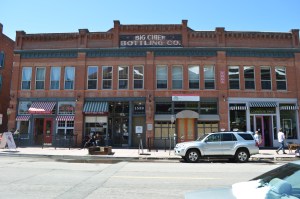
On May 1 we completed a window assessment for the gorgeous masonry buildings along Platte Street between 15th and 16th Streets in Denver.

DSC_0481 DSC_0483

On May 2 we had the opportunity to travel to Crested Butte for the kick-off meeting for our project at the Crested Butte Mountain Heritage Museum.

DSC_0503 DSC_0501

On May 3 we attended the construction meeting at Ponderosa Lodge on the La Foret Conference and Retreat Center in the Black Forest.  This phase of the project is nearly complete!

Pueblo Hose Co No 3 DSC_0412

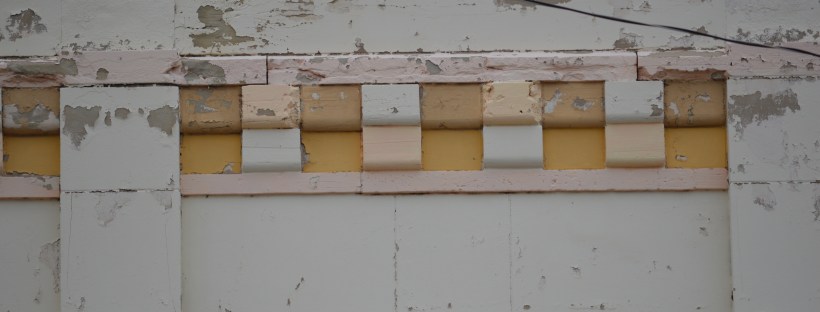
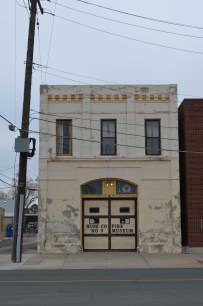
May 4 we headed to Pueblo for field documentation work at the Hose Co. No. 3 building, the current home of the Pueblo Fire Museum.


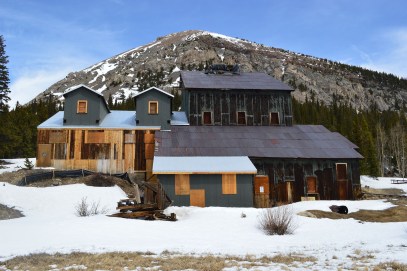
On Cinco de Mayo we toured the Wagon Wheel Gap Fluorspar Mine in Creede, Colorado with our friends at Wattle and Daub Contractors to evaluate current conditions and determine emergency repairs required. The mine operated between 1911 and 1950 and the fluorite was sent to Pueblo to be used as a flux at the Colorado Fuel & Iron Company.

DSC_0585

We met with the Colorado Springs Historic Preservation Board on May 8 to discuss the Colorado Springs Depot Masonry Rehabilitation project.  Construction Documents to be completed soon with construction anticipated later this year!

pulliam-lobby.jpg pulliam-community-building

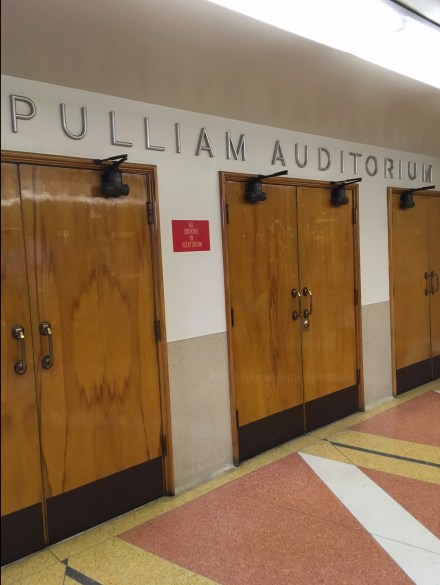
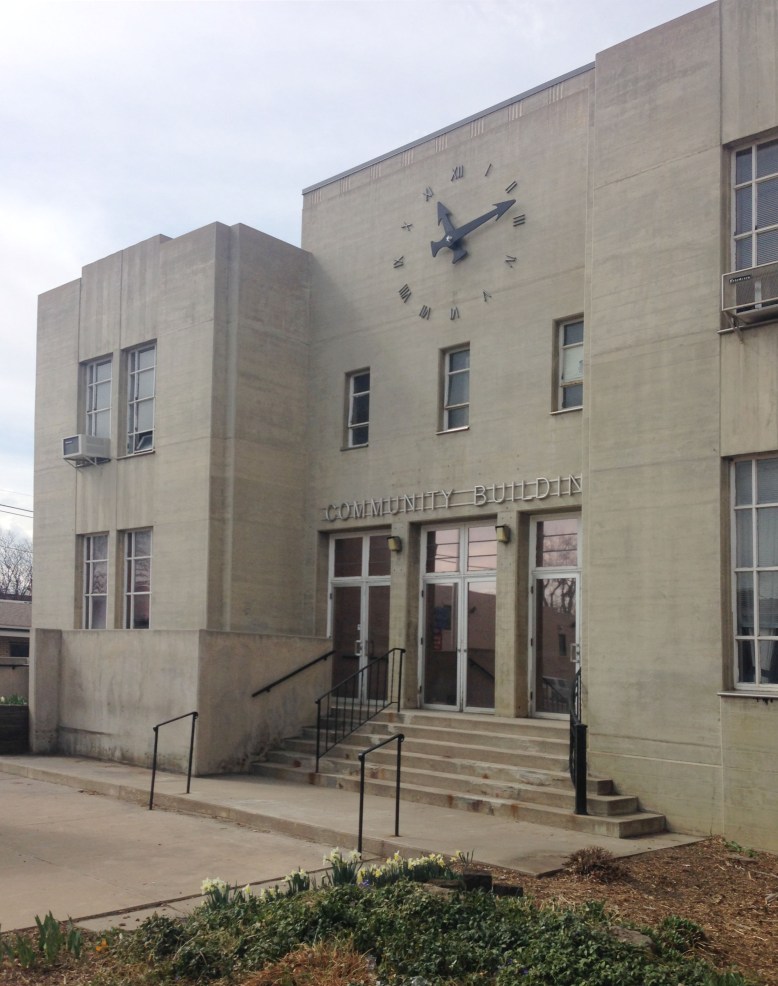
On May 9, we met with the City of Loveland and the Pulliam Community Foundation to discuss the upcoming rehabilitation of the Pulliam Community Building.

IMG_0213 bessie smith interior

While we were up in northern Colorado, we also dropped off the permit drawings for the Bessie Smith House.  Soon the house will be set on its new foundation!

Briggsdale briggsdale2

We also found time to head to Briggsdale with Colorado Preservation Inc. to check out the Land Utilization Headquarters buildings.  We’re looking forward to working together on a Historic Structure Assessment for the buildings.

DSC_0465

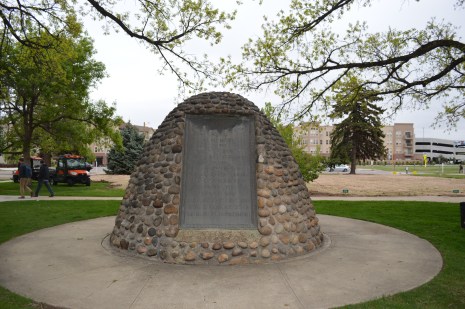
Finally, on May 10 we checked out the City of Aurora’s WWI Memorial, located on the UCD Anschutz Campus.  The Memorial will be the subject of an assessment and documentation effort in preparation for cleaning and restoration.

We’ve already had a busy Historic Preservation Month – we are looking forward to continuing to work with great clients and their beautiful historic buildings and structures!

Hose Company No. 3

Jessica Reske

Hose Co. No. 3 was constructed in 1894 to house horses and horse-drawn fire-fighting apparatus.  The building was designed by John F. Bishop, a prominent Pueblo architect.   Constructed of brick and stone masonry, the building was designed in the 19th century commercial style, and includes elements of the Italianate style.  The front (northwest facade) is faced with grey sandstone while the side and rear facades are constructed of multi-wythe brick masonry.  At the rear of the building, a hose tower rises an additional story past the roof line of the two-story building.  The entire building was painted sometime prior to the 1960s based on available photographs of the building.

When constructed, the interior of the building was designed to accommodate one horse-cart, two stalls for horses, and the hose tower drain on the first floor.  The second floor included a sleeping room, sitting room with lockers, bathroom, and feed room with hay and a feed box for grain.  The feed room was converted to a kitchen in 1915 when the fire department ended the era of horse-drawn equipment.

The building actively used by the Pueblo Fire Department until 1979.  From 1979 to 1989, the fire department used the building for storage.  In 1989, the Pueblo Fire Museum first opened in the building.  The Museum operated until 1992, when it was closed for several years.  Following inventory of the collection, the Museum was re-opened and remains in use as the Pueblo Fire Museum.  The building is one of the oldest in Pueblo and is a City of Pueblo Historical Landmark.

Form+Works Design Group is working with Hord Coplan Macht to produce construction documents for the rehabilitation of the exterior of the building.  In addition, critical repair work will be completed this summer to re-anchor loose sandstone and remove failing stone on the front facade of the building.

DSC_0373

For additional information about the history of the building and the Museum please visit http://www.hosecono3.com
DSC_0405

April Grant Applications

Jessica Reske

Good luck to all our clients who submitted State Historical Fund grant applications in the April 1, 2017 grant round!

We were involved with submission of 15 applications this time (photos of some projects below!).  Our participation in these submissions ranged from providing a fee proposal letter to writing the application and providing attachments.  We look forward to the grant award announcement dates of June 1 and August 1!

If you are considering applying for a grant in the next State Historical Fund grant cycle, the next deadline is October 1, 2017.  If you would like assistance with your application, please contact us!


Carry The Torch

Natalie Lord

On Wednesday, a group of our favorite preservation architects had a fantastic lunch with one of our icons, Dana Crawford. Dana is a force of nature here in Denver’s preservation community and it was truly such an honor to sit down with her and discuss her legacy.

One thing we knew before starting form+works was that we needed to gather as much input and advice from anyone willing to talk to us about their business experience. So you can probably start to imagine the excitement we felt being able to ask her how she did what she’s done and what advice she had for us.

On the top of her list is that it is now up to all of us to carry the torch. We discussed at length the dwindling of support around Colorado for historic preservation. It is likely due to such a long streak of success in saving some of our great buildings.  People walk down Larimer Square or into Union Station and revel in the beauty, but few people realize the DECADES of work it took Dana and her team to garner the necessary support and funding to make those projects happen. She spent years lobbying and pushing forward against, what was most times a huge wall of opposition.

She told us that despite how much we likely do not want a part of it, we need to get involved in the political side of the City in order to really keep the ball rolling.

We can’t rest on our laurels, we have to keep up the momentum – Dana

The task ahead of us feels almost too big sometimes. Even the dozens of preservation practitioners, architects, engineers, owners and enthusiasts combined don’t feel adequate enough to fight back against the huge tsunami of development our City is experiencing. But we all have to realize for Dana’s biggest successes, there were likely more than a handful of defeats. Yet despite those, she kept pushing forward. Therefore, so shall we.


Pulliam Community Building

Natalie Lord

Last week form+works kicked off a project at the Pulliam Community Building in Loveland, Colorado. Jessica completed the Historic Structure Assessment for the building in 2014, while at SlaterPaull Architects, making the project a continuation of her previous work. However, it  turns out the Pulliam has connectivity to my childhood as well!

In June of 1936, the Loveland City Council voted to begin the planning process for a new community building. The auditorium is named after Loveland couple, D.T. and Lillian Pulliam who donated $20,000 as seed money for the project. Pulliam was a philanthropist, banker and rancher.


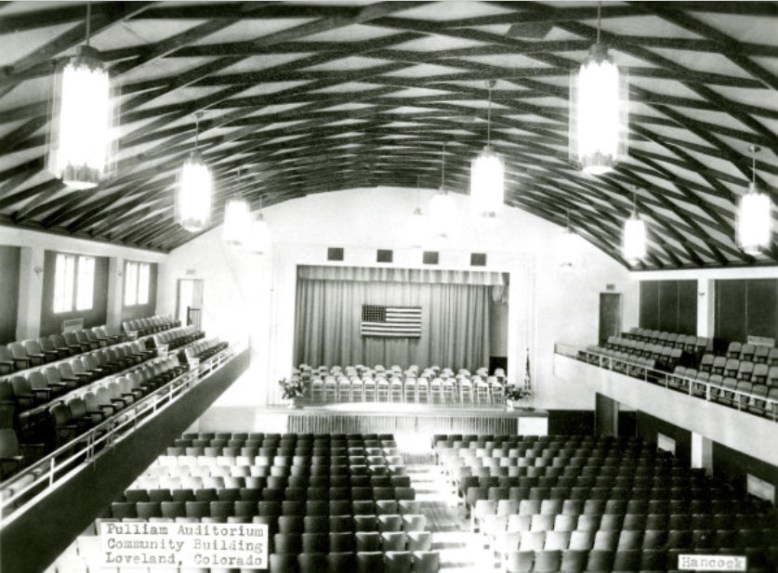
In September 1936, President Franklin D. Roosevelt authorized funding for two Works Progress Administration (WPA) grants for Loveland, one to fund a new auditorium and one for a city hall.  The City chose to combine the two grants and construct a single building to house both functions. It is estimated that the construction of the building put 180 people to work.  Upon completion in 1939, the building housed City offices, provided meeting spaces for a wide variety of groups, and provided auditorium space for movies, plays, lectures, and concerts.  With a seating capacity of 835, the auditorium could accommodate well over 10% of the City’s 6,000 residents.

For over 35 years, the building served as home to the Loveland Community Theatre and it was a popular venue for movie screenings.

(Photo from the Fort Collins Archive #Ha20129)

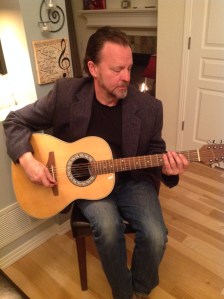
When I turned the corner in Loveland to meet our project team and do a walk-through, I realized instantly that I had been to the Pulliam before. When I was little, my dad was in a guitar competition in the basement where he won a 12-string guitar (Click here to see the video I forced him to record for me!). One of the reasons we love working on historic buildings is that they’ve been part of so many people’s lives. Of course it is not every day that they have been a part of our own lives!

My Dad playing his 12 string

Our project at the Pulliam will resolve code and accessibility issues in order to return the building to a community event space. form+works is excited to be a part of the revival of the Pulliam and continue its legacy for the next generations of Coloradoans.

Jessica on stage doing some field verification

World’s Wonder View Tower

Jessica Reske

The World’s Wonder View Tower, also known as the Genoa Tower Museum, was constructed in 1926.  The tower occupies a site on Genoa Hill in Lincoln County, Colorado at an elevation of 5,600 feet above sea level.  With the top of the tower at an elevation of 5,751 feet above sea level, at the time of construction, the upper deck of the tower reached the highest elevation point between New York and Denver as confirmed by the US Geological Survey.  From this vantage point, on a clear day one could view six states: Colorado, New Mexico, Kansas, Nebraska, Wyoming, and South Dakota.  The extent of this vista was noted in Ripley’s Believe It or Not column in 1933.

The original 1926 construction included the tower with a single-story room to either side.  Additional structures were gradually added to the site and ultimately connected in 1968 to form one building.  These structures included a gas station, trading post, café, and a small lodging facility.  This complex provided a resting point for travelers along Highway 24.  During World War II, the facility was open 24 hours a day, providing a rest stop for soldiers being bussed cross-country.  Following construction of Interstate 70 and the end of rail passenger traffic past the site in the 1970s, visitation to the tower declined.  The tower was closed to the public in 2013.  In 2017, the tower was added to Colorado Preservation Inc.’s list of Most Endangered Places.   

I recently had the opportunity to tour the facility with Colorado Preservation, Inc. and the new owners of the building.  The building is quite unique in form, having been constructed in multiple phases with sections of wood framing, concrete, and masonry.  The masonry walls feature large rocks and petrified wood set in mortar.  The owners of the building shared that the concrete roof reinforcement is accomplished with bed springs, lawn mower parts, and other miscellaneous metals.  Inside the café, the rock walls feature paintings by Princess Ravenwing, a Sioux Tribe artist.  A theatre area of the building includes a stage as well as an audience area with additional paintings.  A wide variety of detritus remains in the building from its era as a museum, including a large collection of glass bottles, books, and rocks. 

Form+Works Design Group is looking forward to working with Colorado Preservation, Inc. and the new owners of the building to update an Historic Structure Assessment previously completed in 2000 and to develop a rehabilitation plan for the building to ensure its preservation for future generations. 

form+works debuts at CPI Saving Places

Jessica Reske, Founding Partner of form+works design group, LLC is presenting at this week’s Colorado Preservation Inc’s Saving Places Conference (click here for the Conference Website). Below is a list of her sessions, please join in and say hello!

Friday 2/3 1:45-3:00pm

True Confessions  (FF4)

Norman Weiss, faculty member in Columbia University’s historic preservation program, has stated that treating historic buildings is not only about reversibility but also about retreatability. This session will explore how or if we can ensure that today’s best practices are sustainable, if future generations will be able to continue our work based on the choices we make today, and how to deal with “fixes” done in the past in the name of protecting / preserving the material and resource that are actually exacerbating or causing on-going deterioration.

*AIA HSW Continuing Education Credit

Speakers:
  • Patricia Carmody
  • Estella Cole
  • Jessica Reske
  • Belinda Zink

Friday 2/3 3:15-4:30pm

Bosler House – Technical Details  (FG5)

Constructed in 1875, the Bosler House is one of the oldest residences in Denver. In 2007 the roof of the building was removed in preparation for a renovation project. As a Denver Landmark, the alterations proposed were not acceptable, and the project was stopped. The building sat vacant without a roof for nearly 10 years. In 2015, a Historic Structure Assessment for the building was completed by Hord Coplan Macht and JVA, Inc. Following completion of the HSA, a roof replacement project was completed in conjunction with exterior rehabilitation work including reconstruction of missing character defining features and rehabilitation of exterior materials.

This session will focus on the technical details and documentation of the Bosler House throughout the exterior rehabilitation. The design team for the exterior rehabilitation of the house will provide an overview of the condition of the house in 2015, prior to the start of the rehabilitation. The presentation will include analysis of the challenges faced during design and reconstruction of missing character defining features. Design decisions will be reviewed including use of traditional methods and materials as opposed to use of new construction materials and methods. Documentation of the Bosler House will be covered, with particular attention to on site documentation work completed at the onset of the project and production of a 3D Revit model. Use of the digital model during design and construction will be covered as it was particularly valuable in reviewing features of the house to be reconstructed.

*AIA, AIA HSW Continuing Education Credit

Speakers:
  • Christine Britton
  • Ian Glaser
  • Allison Harper
  • Jessica Reske